

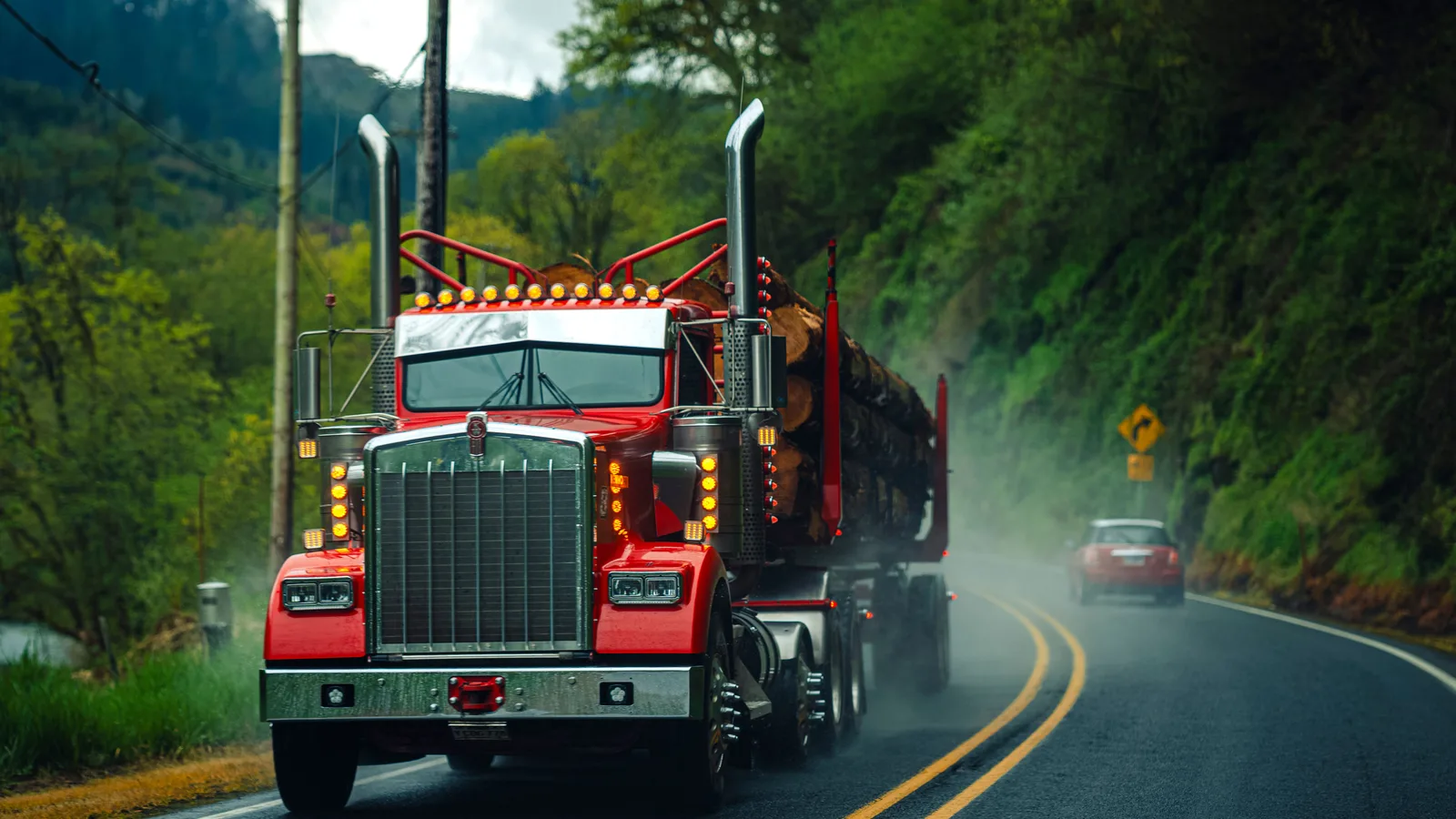
Log truck financing in New Zealand can fund the prime mover, bolster trailer, log crane, and scales together — usually up to 100% of the purchase price, with the rig itself serving as security. (No, the pine trees don't co-sign. The truck carries the risk.) The challenge most operators face isn’t finding a quality Kenworth, Scania, or Western Star — it’s making sure the finance facility matches the realities of forestry cartage, winter weather slowdowns, and harvest quota shifts. Here is how log truck financing actually works, what lenders look for, and how to structure a facility that stays cash-flow positive all year round.
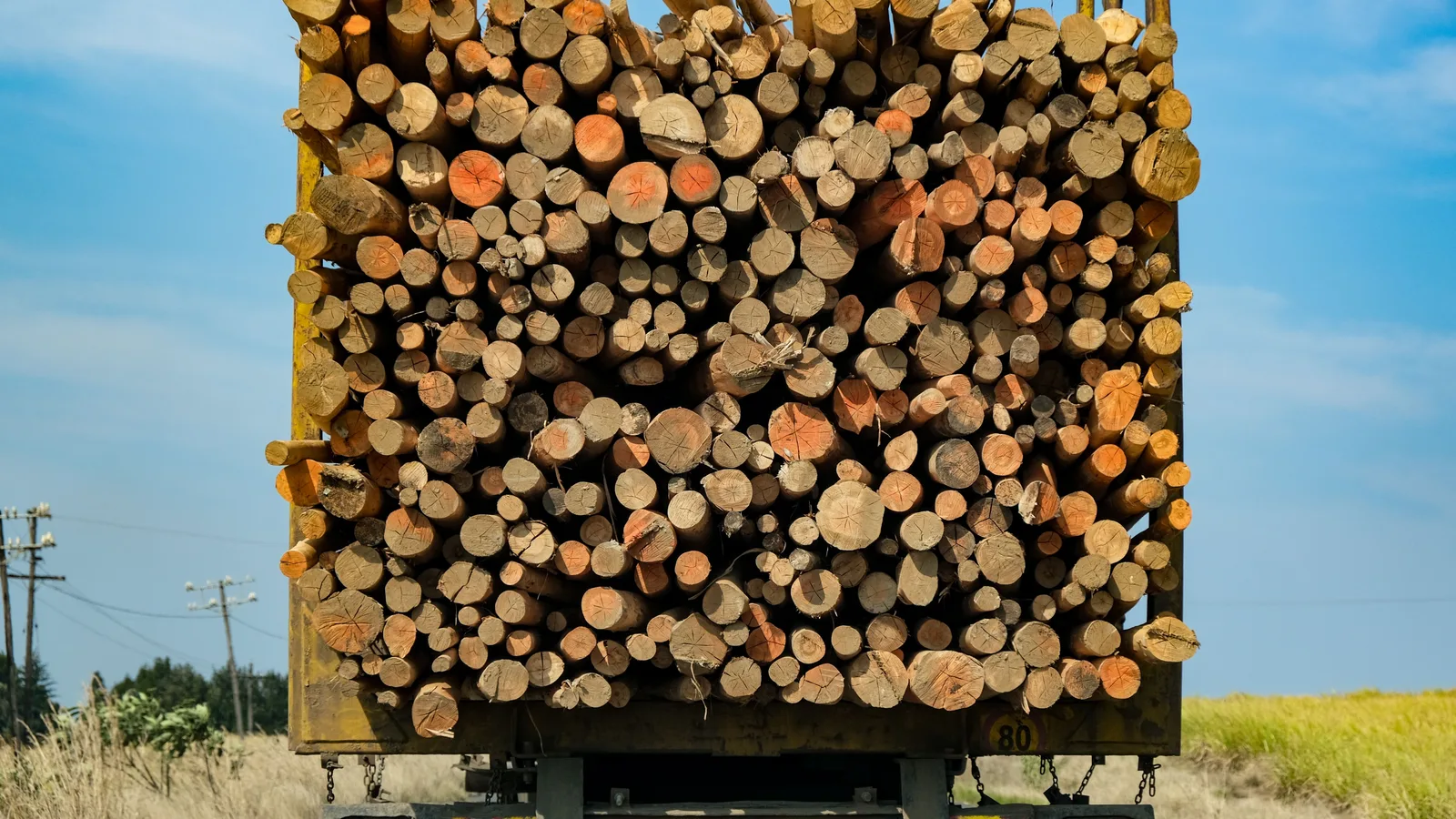
Photo: Magda Ehlers / Pexels
What Log Truck Financing Actually Covers
Log truck financing is a specialised form of commercial asset finance. Unlike standard line-haul freight, a logging unit operates under extreme working conditions — navigating unsealed forest skid roads, carrying high Gross Combination Mass (GCM) under HPMV or 50MAX permits regulated by Waka Kotahi NZTA, and hauling heavy raw timber to ports and sawmills across the country.
A comprehensive log truck facility covers the entire operational unit, not just the cab-chassis:
- Prime movers & cab-chassis: 8x4, 6x4, and heavy twin-steer logging trucks from manufacturers like Kenworth, Western Star, Scania, Volvo, Mack, and Isuzu.
- Trailers & bolsters: 4-axle and 5-axle multi-bolster trailers, skeletal trailers, and self-steering logging trailers built for heavy payloads.
- Log loading equipment: Chassis-mounted hydraulic log cranes (such as Palfinger, Epsilon, or Kesla) for self-loading operations in remote bush landings.
- Specialised forestry accessories: Certified FOPS/ROPS cab protection headboards, Central Tyre Inflation (CTI) systems for forest road traction, and certified on-board load scales (SI Lodec or Loadrite).
Funding the complete unit under one facility means you have a single monthly or seasonal repayment, rather than juggling separate loans across your chassis, trailer, and crane. If your business also runs earthmoving gear for skid construction, our guide on construction equipment financing covers plant machinery in detail.
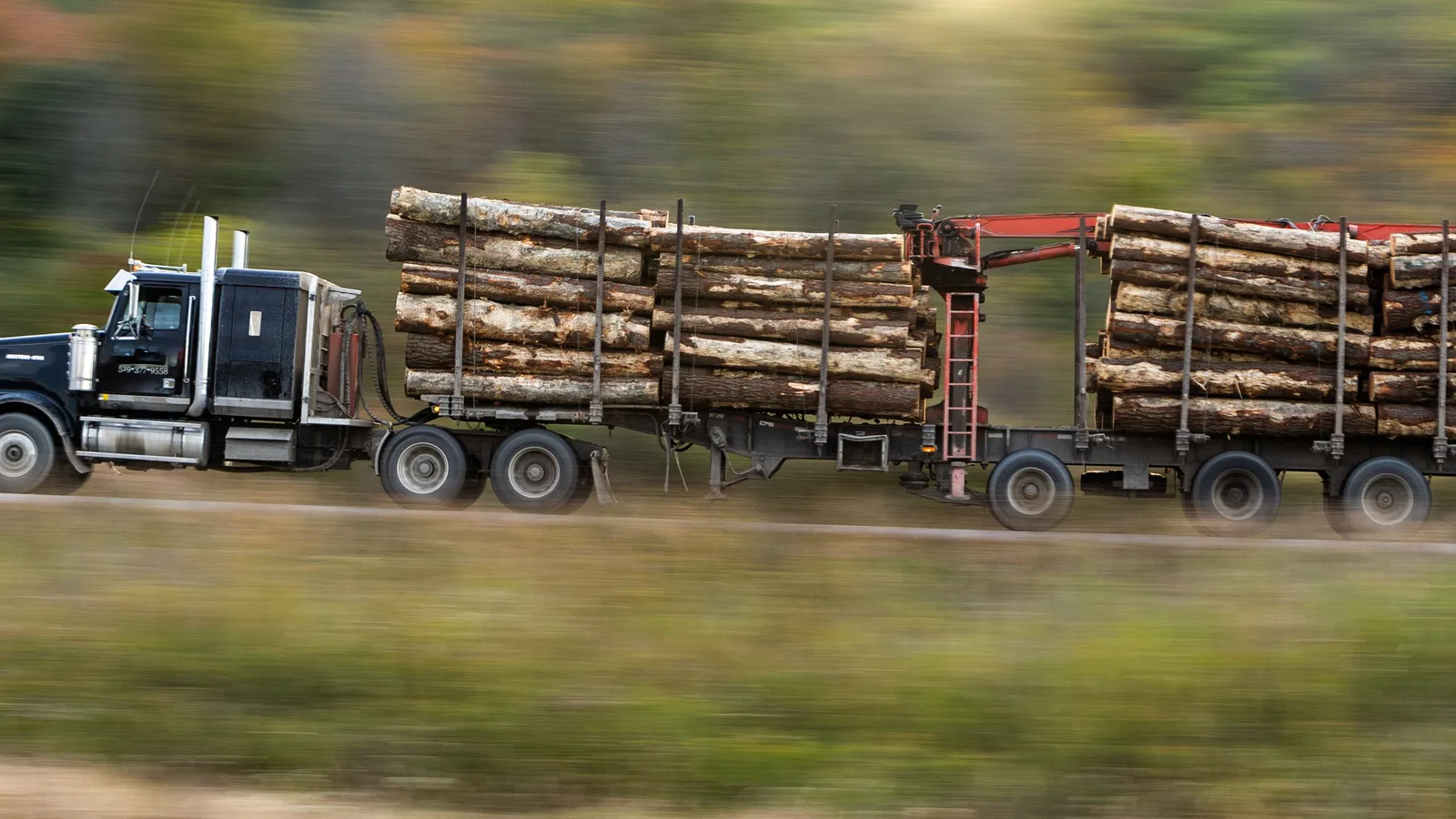
Photo: Aslam Athanikkal / Pexels
Deposit, Loan Size & Terms: Why There's No Fixed Grid
One of the most common questions from owner-drivers and fleet managers is whether they must put down a 20% or 30% cash deposit. The short answer: not always. In commercial asset finance, lenders can fund up to 100% of the purchase price for both new and high-quality used gear, without requiring personal property security.
A logging rig is a substantial capital commitment. A brand-new 8x4 prime mover with a 5-axle bolster trailer and crane can easily exceed $750,000 to $900,000, while late-model used rigs range between $200,000 and $450,000. Because these are high-value commercial assets, pricing and terms are tailored to each specific file rather than picked from a rigid rate card.
Key factors that determine your facility structure include:
- The age, chassis specification, and engine hours of the prime mover (e.g. 8x4 or 6x4 cab-chassis)
- Whether you are funding a bare truck or a complete unit with bolster trailer, log crane, and on-board scales
- Whether you are an established fleet operator, a seasoned contractor, or an owner-driver stepping out solo
- The loan term requested, matched to the truck’s working life on rugged forestry roads
- Bank versus non-bank lender — appetite for heavy forestry transport varies widely across institutions
A 50MAX rig with an under-specced gearbox on a steep forestry skid road is like using a putter from the rough — ambitious, but everyone watching knows how it ends. Getting the loan term matched to the working lifespan of the gear prevents you from still paying off a unit after major driveline overhauls become due.
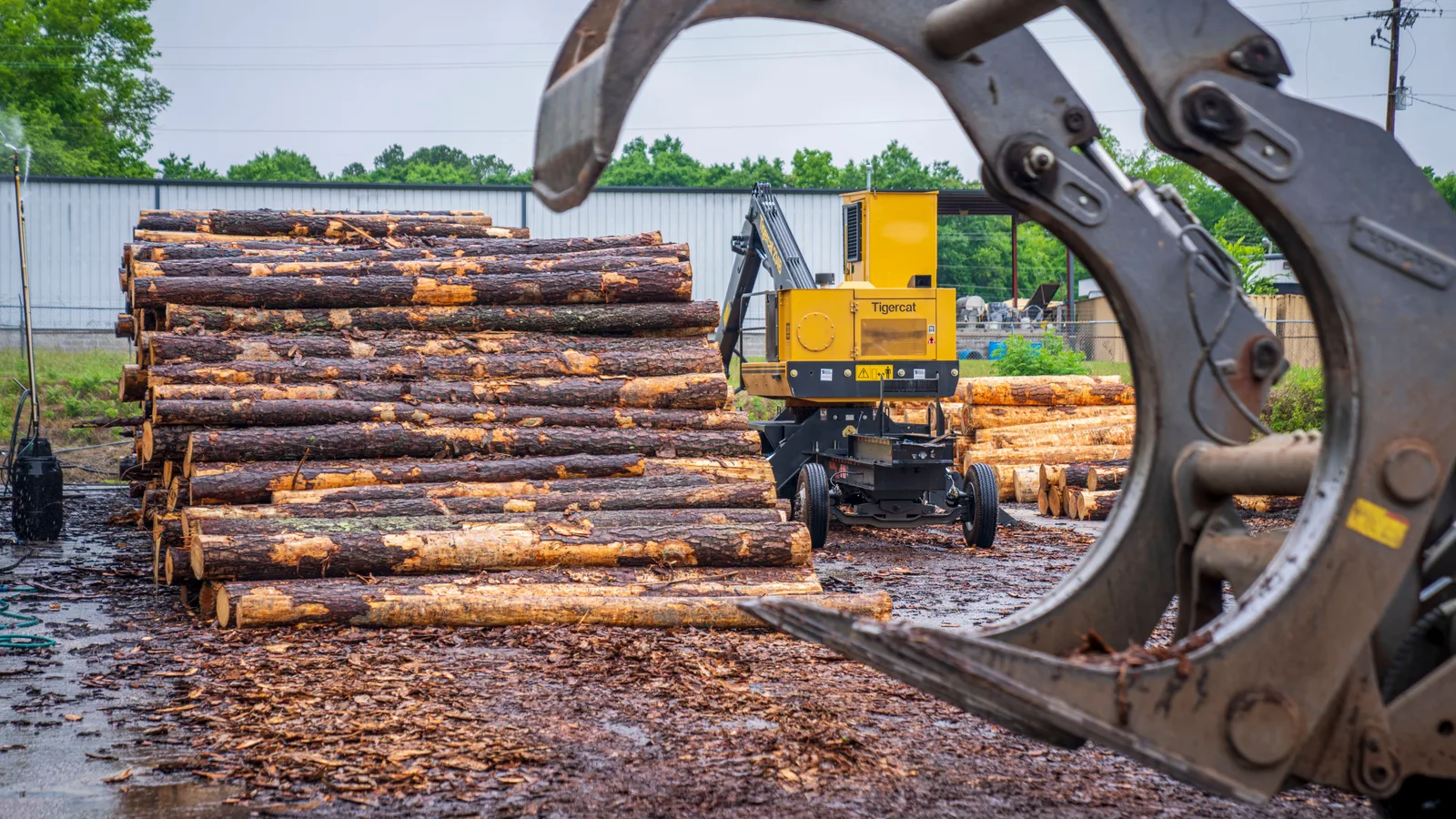
Photo: Mark Stebnicki / Pexels
What Qualifies You for Log Truck Finance
Lenders assessing heavy forestry transport look closely at four pillars: the asset, your contracts, your driving track record, and your financial position.
The asset & fit-out
The truck’s mechanical condition, chassis layout (typically 8x4 or 6x4), axle ratings, bolster trailer setup, and forest-ready additions like CTI (Central Tyre Inflation) and certified cab protection. Lenders back gear fit for forestry harvest conditions.
The cartage agreement
Proof of steady haulage work — whether that is a direct cartage contract with a forestry management company, a subcontract with a harvest crew, or established mill run schedules. Demonstrable log tonnage or cubic-metre volume gives lenders confidence in revenue.
Driver & industry experience
Valid Class 5 heavy vehicle licensing and proven time driving off-highway forest tracks. Heavy log transport is high-skill work; lenders look favourably on operators who know how to manage payloads, traction, and equipment maintenance.
The financial position
Trading accounts for established operators, or realistic cash flow projections and a clear Statement of Position for new owner-drivers. Having your numbers organised upfront prevents weeks of delays.
For established transport operators, standard financial statements and GST returns demonstrate serviceability. For drivers stepping up to become first-time owner-operators, lenders place significant weight on confirmed cartage agreements from reputable forestry management companies or harvest contractors. If you are comparing heavy vehicle finance options across different transport sectors, see our general truck finance guide.
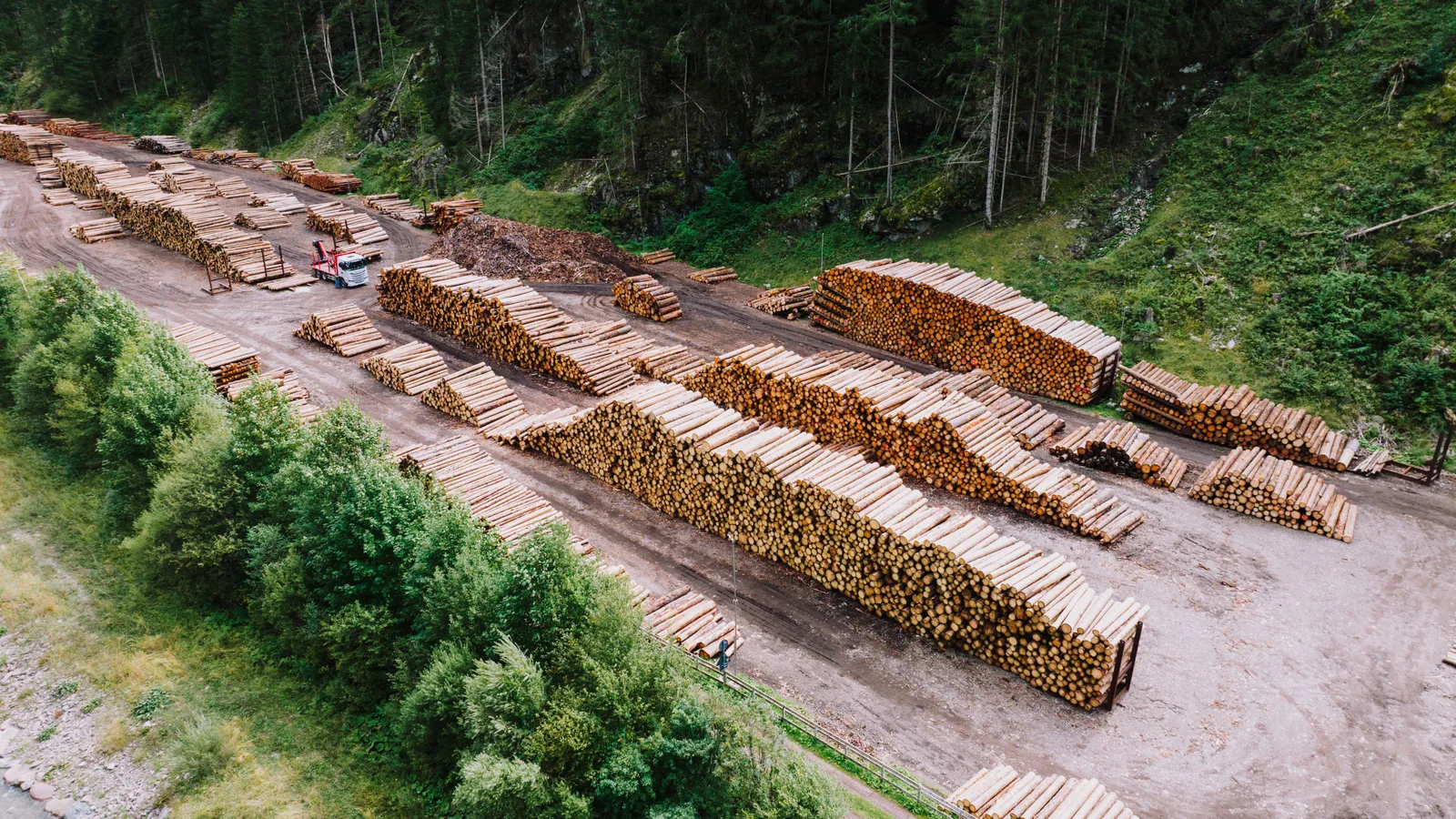
Photo: K / Pexels
Seasonal Cash Flow & Harvest Cycles: Structuring Repayments That Fit
Anyone who has worked in New Zealand forestry knows that log cartage is rarely a flat twelve-month run. Winter deluges in the Central North Island, Northland, or the East Coast can shut down harvest skids for days or weeks. Meanwhile, export wharf gate prices (AWG) fluctuate and domestic processing mills schedule periodic maintenance shutdowns.
A rigid, flat-rate monthly loan repayment can create severe cash flow pressure during those slower wet-weather months. (Yes, an unsealed skid road in the Central Plateau will test your air suspension. It'll test a bank credit manager's nerve too if they've never set foot in a pine block.)
Specialist commercial asset lenders offer flexible facility structuring:
- Seasonal repayment structures: Higher payments during high-tonnage summer and autumn harvest peaks, paired with lower baseline payments during wet winter months.
- Balloon or residual structures: Structuring a calculated residual payment at the end of a 3- to 5-year term to keep monthly cash commitments manageable while the truck is earning.
- GST repayment options: Using the GST refund claimed on the purchase of the truck and trailer to pay down the initial facility within the first 2 to 3 months.
Structuring cash flow correctly before drawing down is vital for transport sustainability. Tools and guidance from Business.govt.nz can help with seasonal cash flow forecasting before locking in debt obligations.

Photo: Feli Art / Pexels
Bank or Non-Bank: Who Says Yes When Timber Quotas Shift
Nine times out of ten, a mainstream retail bank declines a forestry transport application for one reason: timber haulage doesn't look like a standard suburban delivery run on a standardized credit scorecard. Traditional banks often get nervous when export log quotas shift or when an operator doesn't have two years of pristine historical accounts to show.
Non-bank asset lenders view heavy transport differently. They look at the physical security of the asset, your cartage contracts, and your mechanical track record. If the security is solid and the revenue model is viable, non-bank lenders can approve deals that traditional retail banks turn down.
As an independent financial advice provider licensed under FSP 714331 (individual registration FSP 512966), AML Commercial works across a panel of 20 bank and non-bank lenders — 7 mainstream banks and 13 specialist non-bank institutions. We take the time to place your application with the lender whose underwriting criteria match your exact operation, saving you from racking up multiple credit enquiries across different institutions.
When This Isn't the Right Call
Commercial asset finance is powerful when structured against real operational revenue, but it is not the right solution for every scenario:
You are buying a truck without confirmed cartage work
Financing an $800,000 logging unit on speculation without confirmed forestry blocks, mill deliveries, or haulage agreements leaves cash flow exposed when the first payment falls due.
You are looking for general consumer vehicle finance
This is commercial asset finance for heavy transport and forestry businesses, not consumer vehicle borrowing or personal car loans.
You need long-term property-backed borrowing
If you want to raise working capital or purchase a yard secured against commercial land or buildings, our dedicated property finance options are designed for that structure instead.
How to Apply and What Happens Next
Getting terms on a log truck doesn't need to take weeks of committee meetings. Here is the straightforward process:
- Initial conversation: You tell us about the rig you want to buy (new or used), the vendor or dealer quote, and your cartage setup. There is no upfront fee for initial advice.
- Indicative term sheet in 24–48 hours: We structure the file and present options from our panel of lenders, outlining rates, deposit options, and repayment terms clearly.
- Approval & settlement in as little as 72 hours: Once you select your preferred structure and provide standard verification documents, settlement funds are paid directly to the vendor so you can take delivery and get the rig working.
If your current bank is nervous about winter log quotas, don't leave the rig parked. Get in touch with us — we'll place it with a lender who understands heavy transport.
A logging rig doesn't haul its first payload on a good truck alone — it needs the prime mover, bolster trailer, log crane, and seasonal cash flow structuring sorted before the timber harvest begins. Give us a call and let's find out what terms your operation actually qualifies for.